
New countries subject to US visa bond
The United States is expanding its visa bond program to 50 countries, with a deposit of up to $15,000 required for certain tourist and business visas.
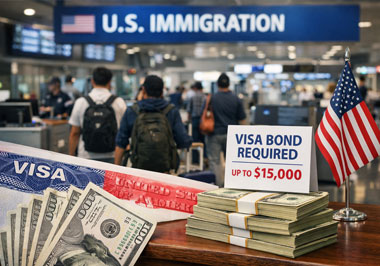
The United States is taking a new step in tightening its immigration policy. From April 2, 2026, a growing number of travelers will face a new requirement: the payment of a bond to obtain a US visa.
This measure applies to B1/B2 visas (tourism and business) and now targets 50 countries, following the addition of 12 new nationalities. The amount can reach 15,000 dollars, a decision that is already raising many questions among travelers.
US visa bond: what you need to know
- 💰 A bond of $5,000 to $15,000 may be required
- 🌍 12 new countries affected, bringing the total to 50
- 📅 Effective from April 2, 2026
- 🛂 Measure applied to B1/B2 visas (tourism and business)
- ⚠️ Decision made on a case-by-case basis during the consular interview
- 🔁 Refund available if the stay complies with visa conditions
- ❌ The bond does not guarantee visa approval
- ✈️ Entry and exit only through authorized commercial airports
- 🚫 Travelers using ESTA are not affected
The principle is simple: some visa applicants will have to pay a security deposit before receiving their visa.
👉 This bond is:
- 💰 set between $5,000 and $15,000
- 🛂 decided case by case during the consular interview
- 🔁 refunded if the traveler complies with the visa conditions
- ❌ not mandatory for all applicants
⚠️ Key point: ➡️ paying the bond does not guarantee approval of the US visa
Payment can only be made through official US government platforms (such as Pay.gov) after validation by a consular officer.
From April 2, 2026, nationals of the following countries may be subject to this bond:
👉 With this expansion, 50 countries are now affected, mainly in Africa, Asia, and some parts of Latin America.
The stated objective of the US authorities is clear:
👉 to reduce visa overstays in the United States
📊 Some key figures highlighted:
👉 Result:
The United States estimates that this measure could save up to 800 million dollars per year.
The refund of the bond depends on compliance with specific rules:
👉 In these cases, the file is transferred to the US administration (USCIS).
👉 Important:
➡️ European travelers (France, Belgium, Switzerland, etc.) are not affected and continue to travel with a simple ESTA travel authorization.
The Department of State has clearly indicated that this list could evolve.
👉 The selection of countries is based on several criteria:
➡️ It is therefore possible that other countries will be added in the coming years.
The US visa bond program now applies to 50 countries. This list, regularly updated by the US authorities, mainly includes countries with high visa overstay rates. From April 2, 2026, it includes the 12 newly added nationalities, as well as countries already affected since 2025 and early 2026. Here is the full and current list of countries subject to a bond for the US B1/B2 visa:
👉 This list may change depending on decisions made by the US Department of State. Before applying for a US tourist visa or B1/B2 visa, it is recommended to check whether your country is affected by this United States visa bond.
Find out if your question has been answered in the list below
No, the US visa bond is not systematic. It is decided on a case-by-case basis during the consular interview for certain B1/B2 visa applicants. Even if it is required, it does not guarantee visa approval.
Yes, the bond is fully refundable if the traveler complies with the conditions of the visa, especially by leaving the United States within the authorized period. However, a visa overstay or failure to comply with the rules may result in the loss of the amount paid.
The measure applies to nationals of 50 countries, mainly in Africa, Asia, and Latin America. Travelers eligible for ESTA USA, such as Europeans, are not affected by this bond.