
The world’s most powerful passport
In 2026, the power of a passport is no longer measured solely by visa-free destinations, but also reflects the global geopolitical and diplomatic balance.
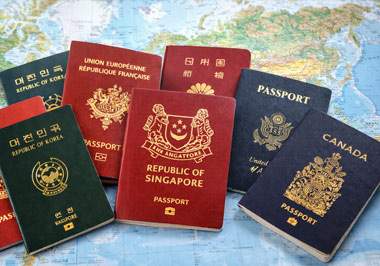
In 2026, the most powerful passport in the world is Singapore, with 192 destinations accessible without a prior visa. But beyond the podium, the Henley Passport Index 2026 confirms a deeper trend: passport power has become a real indicator of soft power, reflecting a country’s diplomatic strength… and the growing gap between “high-mobility” citizens and those who remain largely restricted.
In this article, we go further than a simple ranking: a 2024 vs 2025 vs 2026 comparison, key trends, and a clear explanation of what “visa-free travel” actually means today.
🔑 Key takeaways – Most powerful passport in 2026
- 🌍 Singapore is the world’s most powerful passport in 2026 with 192 visa-free destinations
- 📊 The mobility gap reaches 168 destinations between the top and bottom passports
- 📈 Asian and European passports have dominated the top 10 since 2024
- 🇺🇸 The United States and the United Kingdom continue a long-term decline despite returning to the top 10
- 🌐 Passport power is now a key indicator of soft power and international influence
- 🔄 Compared with 2024 and 2025, the 2026 ranking confirms a long-term reshaping of global mobility
In 2026, travelers frequently ask about the most powerful passport in the world. The Henley ranking provides an objective answer by measuring the level of international travel freedom each passport offers.
📌 Singapore holds onto the top spot for the second year in a row, with 192 destinations accessible without a prior visa. This performance can be explained by several factors:
In other words, passport power doesn’t depend only on “paperwork”: it’s often the result of consistent foreign policy, stable international relationships, and a broader climate of trust.
When we talk about the most powerful passports, we’re referring to the number of destinations that are accessible:
⚠️ Important: “no prior visa” doesn’t mean “no requirements”. Some countries require an eTA/ETA, an online registration, or supporting documents at arrival (return ticket, hotel booking, travel insurance, etc.).
👉 So “power” is mainly a measure of ease of access, not a guarantee of automatic entry.
The 2026 ranking of the most powerful passports highlights the countries offering the largest number of destinations accessible without needing a prior visa. The top tier is dominated by Asia and Europe, and the year-to-year results remain fairly stable.
| Rank | Passport | Visa-free destinations |
|---|---|---|
| 1 | Singapore | 192 |
| 2 | Japan | 188 |
| 2 | South Korea | 188 |
| 3 | Denmark | 186 |
| 3 | Spain | 186 |
| 3 | Luxembourg | 186 |
| 3 | Sweden | 186 |
| 3 | Switzerland | 186 |
| 4 | France | 185 |
| 4 | Germany | 185 |
| 4 | Austria | 185 |
| 4 | Belgium | 185 |
| 4 | Finland | 185 |
| 4 | Greece | 185 |
| 4 | Ireland | 185 |
| 4 | Italy | 185 |
| 4 | Norway | 185 |
| 4 | Netherlands | 185 |
| 5 | United Arab Emirates | 184 |
| 5 | Hungary | 184 |
| 5 | Portugal | 184 |
| 5 | Slovakia | 184 |
| 5 | Slovenia | 184 |
| 6 | Croatia | 183 |
| 6 | Estonia | 183 |
| 6 | Malta | 183 |
| 6 | New Zealand | 183 |
| 6 | Poland | 183 |
| 6 | Czech Republic | 183 |
| 7 | Australia | 182 |
| 7 | Latvia | 182 |
| 7 | Liechtenstein | 182 |
| 7 | United Kingdom | 182 |
| 8 | Canada | 181 |
| 8 | Iceland | 181 |
| 8 | Lithuania | 181 |
| 9 | Malaysia | 180 |
| 10 | United States | 179 |
✅ Europe is heavily represented, but Asia (Singapore, Japan, South Korea) remains at the very top.
📍 A clear trend: the best-performing countries typically combine:
By contrast, regions facing political, security, or economic crises often face more restrictions, which directly impacts the passport ranking.
Comparing 2024, 2025, and 2026 helps explain the dynamics behind global mobility. Some passports lose a bit of power, while others confirm long-term momentum.
| Country | 2024 | 2025 | 2026 | Change 2024 → 2026 |
|---|---|---|---|---|
| Singapore | 194 | 193 | 192 | -2 |
| Japan | 193 | 189 | 188 | -5 |
| South Korea | 193 | 190 | 188 | -5 |
| France | 194 | 187 | 185 | -9 |
| United States | 188 | 180 | 179 | -9 |
| United Arab Emirates | 183 | 184 | 184 | +1 |
It sounds counterintuitive, but it’s common:
👉 In short: global mobility is increasing, but it doesn’t benefit everyone equally.
Once at the top of the global ranking, the United States and the United Kingdom have been gradually slipping. This reflects political and diplomatic choices that directly influence passport power.
A decade ago, the United States and the United Kingdom were at the very top. In 2026, the UK sits around 7th (182 destinations) and the US rounds out the top 10 (179).
This decline is less about a “technical anomaly” and more about a broader shift:
🧾 The more constraints a country imposes on inbound travelers, the more it risks equivalent measures in return. The result:
Even though the ranking shifts slightly each year, some long-term trajectories stand out. Looking back at Henley Passport Index data since the mid-2000s, a handful of countries have dramatically improved their international travel freedom. These gains are rarely accidental: they reflect deliberate diplomatic, economic, and strategic choices. The most striking example is the United Arab Emirates, along with several countries in the Balkans, parts of Eastern Europe, and, more recently, China.
The UAE has recorded the most dramatic rise in the global passport ranking.
This rise is driven by highly proactive economic diplomacy. The UAE has secured numerous visa-waiver agreements, especially with Europe, Asia, and Latin America. Its role as a global hub (finance, aviation, tourism, logistics) has also boosted credibility with many governments.
Another key lever: managed reciprocity. By making it easier for certain nationalities to enter the UAE, the country has gained more favorable travel access for its own citizens. As a result, the UAE passport is now among the world’s most powerful—ahead of many long-established Western democracies.
Other regions have improved more gradually, but just as meaningfully.
In the Western Balkans and Eastern Europe, several countries have moved up thanks to:
Albania, Serbia, Bosnia and Herzegovina, North Macedonia, and Georgia have all gained many visa-free destinations over the past two decades.
China shows a different pattern. Long ranked relatively low, the Chinese passport has climbed quickly over the last decade:
This progress reflects a targeted opening strategy: temporary exemptions, bilateral agreements, and easier entry for selected nationalities. Unlike many Western countries, China has recently used border openness as a tool of influence, boosting both diplomatic and economic appeal.
At the other end of the ranking, the situation is far more troubling. The Henley Passport Index 2026 highlights an unprecedented gap in international mobility between the most powerful and the least powerful passports.
| Rank | Country | Visa-free destinations |
|---|---|---|
| 101 | Afghanistan | 24 |
| 100 | Syria | 26 |
| 99 | Iraq | 29 |
These countries face political instability, armed conflict, international sanctions, and limited diplomatic reach. The outcome is clear: citizens face near-constant restrictions on international travel.
Between the Singapore passport (192 destinations) and the Afghan passport (24), the gap reaches 168 countries. This difference highlights an increasingly visible reality:
🌍 international mobility has become a privilege.
The consequences are significant:
The passport ranking doesn’t just measure travel freedom—it also reflects structural inequality between nations.
In recent years, passport power has increasingly been viewed as a true indicator of soft power. It reflects a country’s ability to build trust, negotiate balanced agreements, and integrate into global flows of people, capital, and ideas.
The contrast between certain countries is striking.
On one hand, the United States gives its citizens broad visa-free access abroad, but allows visa-free entry to the US for a limited number of nationalities.
On the other, China has recently expanded easier entry for many countries.
➡️ This highlights a key point:
freedom to travel out ≠ openness to travel in
Countries that make it easier to enter often strengthen diplomatic leverage and international attractiveness.
Today, visa policies rely on several levers:
These tools enable tighter control of travel flows, but they also shape a country’s international reputation—and, over time, the power of its passport.
Holders of a US passport remain among the world’s most mobile travelers in 2026. The United States ranks in the global top 10, even though its long-term trend has been gradually downward compared with a decade ago.
Even with this relative drop, the US passport still offers one of the highest levels of international travel access in the world.
Having a US passport often means you can travel to many countries without a traditional visa. However, “visa-free” doesn’t always mean “paperwork-free”. More destinations now require an electronic travel authorization (or online registration) before departure, even for short tourist trips.
Here are common examples US travelers frequently encounter:
These steps are usually fast, online, and often valid for multiple trips, but they may involve:
Also keep in mind: even when a destination is visa-free, border officers can still ask for:
👉 To avoid last-minute issues, always check entry requirements by destination (including ETA/eTA/ETIAS rules) and confirm the latest updates before each trip.
Find out if your question has been answered in the list below
In 2026, the most powerful passport in the world is Singapore’s. It provides access to 192 destinations without a prior visa. The ranking comes from the Henley Passport Index, which measures how many destinations each passport can access visa-free (or with simplified entry).
Yes. Passport rankings can change year to year due to diplomatic agreements, security policy updates, and changes in entry rules. Some countries rise thanks to new visa waivers, while others fall when requirements tighten or geopolitical conditions shift.
Yes—US citizens can travel visa-free to many destinations in 2026, and the US passport remains in the global top tier. However, “visa-free” increasingly comes with pre-travel steps such as an ETA (UK), NZeTA (New Zealand), K-ETA (South Korea), or ETIAS for Europe once in effect.