
Vietnam entry requirements 2025
Vietnam is expanding its e-Visa system by adding 41 new international entry points, facilitating the arrival of travelers by air, land, and sea.
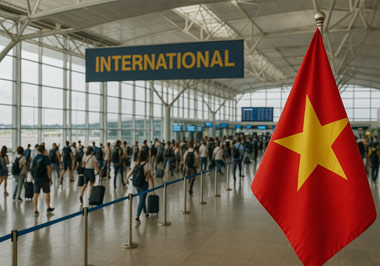
Vietnam is strengthening its openness to tourism with the addition of 41 new entry points compatible with the e-Visa, bringing the total number of accepted international crossings to 83. This decision, formalized by Resolution 389/NQ-CP of December 2, 2025, facilitates the arrival of foreign travelers via new airports, strategic land border crossings, and numerous seaports. This expansion complements the e-Visa reform in effect since 2023 and aims to simplify entry requirements while supporting the country's tourism growth. Here is the complete list and what this means for your next trip to Vietnam.
⭐ Key points to remember about the new entry points to Vietnam
- ✈️ 41 new entry points have been added to the Vietnam e-Visa system.
- 🌏 The country now has 83 international access points that accept e-Visas.
- 🧭 Major additions: new airports, land border crossings, and seaports.
- 📅 Official measure since Resolution 389/NQ-CP of December 2, 2025.
- 🛂 e-Visa travelers can enter only through points of authorization.
- 🔄 This expansion reinforces Vietnam's strategy of opening up to tourism.
(Official update – Resolution 389/NQ-CP of December 2, 2025)
Vietnam is taking a new step in modernizing its entry requirements. With the addition of 41 new international access points eligible for e-Visas, the country is dramatically expanding arrival options for travelers. This expansion brings the total number of border points—air, land, and sea—where an e-Visa can be used to 83.
This development confirms the Vietnamese government's ambition to facilitate travel, relieve congestion at major airports, boost border regions, and support booming tourism growth. For visitors, this update means easier, more flexible access that is better distributed throughout the country.
The expansion of the e-Visa network meets several strategic objectives, but above all, it brings concrete benefits:
The government is adding four international airports to the list, two of which will begin operations in the coming years. Their early inclusion ensures a smooth transition once they open.
With these additions, travelers now have better air coverage throughout Vietnam.
The reinforcement is particularly visible on the land side, with strategic openings along the Chinese, Laotian, and Cambodian borders.
Here are the new land border crossings now compatible with e-Visa:
These openings offer a unique opportunity for travelers exploring Southeast Asia on the road. It becomes easier to travel from Laos or Cambodia to Vietnam without having to rely on a major airport.
Vietnam is also adding a wide range of 27 seaports and border crossings, covering many coastal provinces. This is excellent news for cruise passengers and travelers arriving by boat.
Here are the new ports accepting e-Visas:
This massive expansion of the port network confirms Vietnam's efforts to attract more international cruises and encourage regional traffic.
Before this update, travelers with an e-Visa could arrive via 42 points, including:
With the addition of 41 new points, the network becomes much larger and better distributed.
In concrete terms, this expansion improves the traveler experience in several ways:
Find out if your question has been answered in the list below
Vietnam is adding 41 new e-Visa-compatible entry points, including four airports, several land border crossings with China, Laos, and Cambodia, and 27 ports. This expansion brings the total number of official entry and exit points for electronic visas to 83.
No. It is required that you use one of the 83 authorized entry points. An ineligible border crossing will result in denied entry. Before traveling, check that your airport, land border crossing, or port is among the compatible points indicated by the Vietnamese authorities.
Yes. New land border crossings with these three countries are now e-Visa compatible, facilitating cross-border travel. Regional travelers can now enter Vietnam more easily without going through a major airport, improving travel between neighboring countries in Southeast Asia.