
Entry refused in Thailand affects an increasing number of tourists
Entry refused in Thailand is worrying travelers: tourists are being turned away despite valid reasons, due to unclear and inconsistently applied immigration rules.
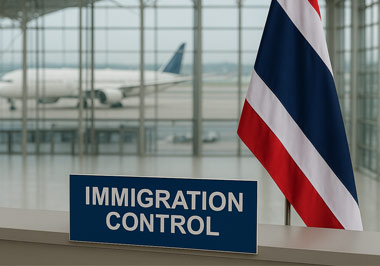
For several weeks now, testimonials have been multiplying on social media and in the specialist press: travelers are being refused entry to Thailand, sometimes without clearly understanding what they are being blamed for. Yet these tourists hold a valid passport, respect the authorized length of stay and appear, at first glance, to have done nothing wrong. This situation is creating a climate of uncertainty that worries both travelers and tourism professionals. The reasons include a recent tightening of controls, poorly explained rules and a wide margin of discretion left to immigration officers. So why is entry refused in Thailand even to “compliant” tourists? And how can travelers avoid being blocked on arrival?
🎯 Key points: Entry refused in Thailand
- Two consecutive visa-free entries are now tolerated before a risk of refusal.
- Tourists are being turned away despite having valid reasons for their stay.
- Immigration rules lack clarity and official communication.
- Enforcement varies depending on border posts and immigration officers.
- The tourism sector is calling for greater transparency and pre-screening.
- The mandatory completion of the Thailand Digital Arrival Card (TDAC) before arrival has been in force since May 2025.
Until recently, Thailand was perceived as a relatively flexible destination when it came to entry requirements. Visa exemption for many nationalities made short tourist stays easier.
But since the end of 2025, the authorities have clearly changed course.
🎯 Stated objectives:
As a result, arrival checks have become stricter, and entry refusals more frequent, including for travelers acting in good faith.
One of the main changes concerns the repeated use of visa exemption.
New entry rules for Thailand: what has changed
👉 Even though no written rule formally prohibits a third entry, the final decision rests with the officer.
🧠 This is where the problem begins: many travelers believe they are compliant, but no longer match the expected profile of an occasional tourist.
Contrary to popular belief, an entry refusal does not necessarily mean a violation.
Here are the main reasons cited during checks:
Authorities may require proof of sufficient financial means for the duration of the stay.
📍 Common issues:
Hesitant or contradictory answers during the interview may raise suspicions, even without any bad intention.
This is one of the points most criticized by tourism professionals.
⚠️ The control process is not automated.
It is largely based on:
👉 Two travelers in similar situations may receive different decisions depending on the airport or the officer encountered.
This lack of uniformity fuels a sense of arbitrariness and injustice among some tourists.
Since 2025, travelers must complete a digital arrival card before entering Thailand.
🎯 Its purpose:
However, the TDAC does not guarantee entry into the country.
It only allows a pre-declaration, without formal pre-approval.
👉 Many travelers mistakenly believe that validation of this card is equivalent to a green light.
Hoteliers, agencies and airlines are noticing growing concern.
🗣️ Their main criticisms:
Some professionals fear that this uncertainty will deter travelers, especially at a time when Thailand is seeking to revive its international appeal.
In response to criticism, one option is being considered: the introduction of a pre-approval system, inspired by what already exists in other countries.
🧠 The principle:
🎯 Advantages:
For now, no official date has been announced, but the debate is clearly underway.
Even though zero risk does not exist, certain precautions can make a difference.
💡 In the case of prolonged or repeated stays, it is often preferable to apply for an appropriate visa rather than multiplying visa-free entries.
Find out if your question has been answered in the list below
Yes. Entry into Thailand remains subject to the discretion of immigration services. Even with a valid passport and visa exemption, a traveler may be rejected entry if their profile does not match that of a typical tourist, particularly in cases of repeated entries, extended stays, or insufficient documentation.
Rejections often relate to multiple entries without a visa, lack of an exit ticket, insufficient or inconsistent proof of funds, or vague answers during checks. Officers also assess the history of stays to detect possible disguised settlement or unauthorized activity.
To limit the risks, it is advisable to travel with an exit ticket, a credible accommodation reservation, sufficient financial proof, and a clear plan for your stay. Travelers making frequent or long stays should consider obtaining an appropriate visa rather than making multiple entries without a visa.